
Updated (New York Time): Loading…
| # | Name | Symbol | Price (USD) | Market Cap | 24h Volume | 24h% |
|---|---|---|---|---|---|---|
| Loading live data… | ||||||
The year 2025 marks a defining moment in the evolution of digital finance. The cryptocurrency market, which once existed on the fringes of the financial world, has now entered a phase of global legitimacy. Blockchain networks have matured, governments are framing clearer regulations, and institutions are adopting crypto assets as part of their core investment strategies.
Your live table above showcases the Top 150 cryptocurrencies, including dominant leaders such as Bitcoin, Ethereum, BNB, XRP, and Solana, all the way down to emerging layer-2 tokens, DeFi protocols, and stablecoins. This article provides an in-depth understanding of how these assets shape the digital economy of 2025 — without repeating the live data already displayed.
Evolution of the Crypto Market
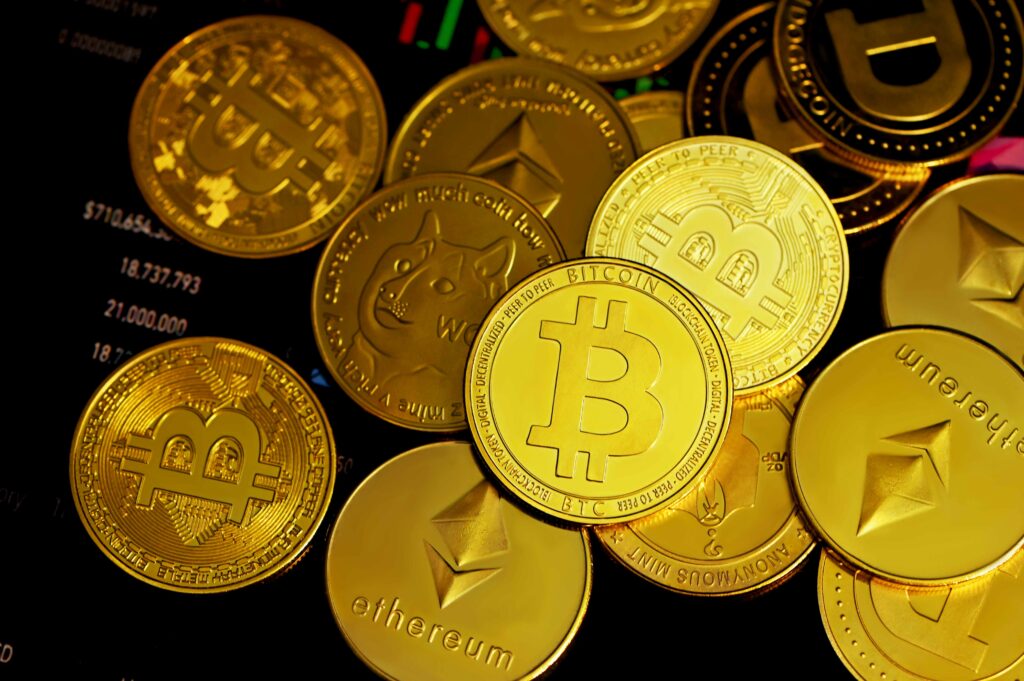
In the early years, the crypto market was dominated by a handful of assets — mainly Bitcoin and Ethereum. But by 2025, the market has diversified massively. Over 20,000 digital assets are actively traded, yet only the top 150 hold real technological or economic value.
These cryptocurrencies represent categories such as:
Layer-1 blockchains like Bitcoin, Ethereum, Solana, Avalanche
DeFi protocols like Chainlink, Uniswap, Aave
Stablecoins such as USDT, USDC, DAI
Privacy coins like Monero and Zcash
AI & Big Data tokens like Render (RNDR) and Fetch.ai (FET)
Gaming and Metaverse tokens such as The Sandbox (SAND), Axie Infinity (AXS), and Gala (GALA)
Each plays a distinct role in the decentralized financial ecosystem.
The Core Drivers Behind the Top 150 Cryptocurrencies
1. Institutional Adoption
The biggest factor behind the rise of cryptocurrencies in 2025 is large-scale institutional involvement. Financial giants like BlackRock, Fidelity, and MicroStrategy have increased Bitcoin and Ethereum exposure, while payment networks such as Visa and PayPal have integrated blockchain-based settlement systems.
2. Layer-1 Competition
Layer-1 blockchains remain the backbone of the crypto ecosystem. Ethereum continues to dominate smart contracts, but Solana, Avalanche, and Sui are providing faster, cheaper alternatives. These networks are attracting developers looking for scalable solutions with low gas fees.
3. Growth of DeFi Ecosystem
Decentralized finance, or DeFi, has transformed traditional banking by offering yield generation, lending, and staking services directly on blockchain networks. Projects such as Aave, Curve Finance, and Compound continue to redefine how liquidity and interest work in the digital era.
4. Stability Through Stablecoins
Stablecoins like Tether (USDT) and USD Coin (USDC) serve as the bridge between traditional and digital finance. With combined circulation exceeding $200 billion, they offer traders and institutions a safe way to enter and exit the crypto market without price volatility.
5. Regulation and Compliance
Unlike the unregulated chaos of earlier years, 2025 brings clearer legal frameworks. Countries like the U.S., Japan, Switzerland, and the UAE have launched crypto licensing frameworks that encourage innovation while protecting consumers. This has allowed legitimate projects to flourish while exposing weaker or fraudulent ones.
Analysis of the Top 20 Cryptocurrencies
While your table dynamically displays real-time data for all 150 cryptocurrencies, let’s analyze the top 20 by market influence and technology.
Bitcoin (BTC)
Bitcoin continues to dominate as the most valuable and trusted digital currency. Beyond just price action, it is now recognized globally as a store of value. Bitcoin ETFs, launched in multiple countries, have attracted billions in institutional capital.
Ethereum (ETH)
Ethereum remains the foundation of Web3. Its shift to Proof-of-Stake has reduced energy use by 99%, and its Layer-2 scaling via Optimism and Arbitrum allows near-instant transactions at low cost. The majority of NFTs and DeFi smart contracts still live on Ethereum.
Binance Coin (BNB)
BNB powers the Binance Smart Chain, one of the largest DeFi ecosystems. It is used for trading discounts, staking, and liquidity farming. Binance’s global expansion and compliance progress continue to support BNB’s long-term relevance.
XRP
XRP’s role in cross-border payments remains unmatched. With faster settlement and lower transaction fees, Ripple’s partnerships with banks and payment providers have solidified XRP’s position as a financial bridge asset.
Solana (SOL)
Solana is known for high-speed blockchain infrastructure, processing over 60,000 transactions per second. It has become a developer favorite for Web3 applications, NFT platforms, and gaming tokens.
Category Breakdown of the Top 150 Cryptocurrencies
| Category | Examples | Purpose | Key Strength |
|---|---|---|---|
| Layer-1 Blockchains | BTC, ETH, SOL, AVAX, ADA | Network foundations | High security, scalability |
| DeFi Tokens | LINK, UNI, AAVE, CRV, SUSHI | Decentralized finance apps | Passive income, liquidity |
| Stablecoins | USDT, USDC, DAI, TUSD | Price stability | Fiat-backed stability |
| Exchange Tokens | BNB, WBT, CRO, OKB | Exchange utility | Fee discounts, staking |
| Privacy Coins | XMR, ZEC, DASH | Confidential transactions | High privacy features |
| Metaverse/Gaming | AXS, SAND, MANA, GALA | Virtual assets | NFT integration |
| AI & Big Data | RNDR, FET, AGIX, OCEAN | Machine learning & data | Smart AI models on blockchain |

Global Market Trends in 2025
Growing Government Involvement
Governments have started recognizing the economic importance of digital assets. Central Bank Digital Currencies (CBDCs) are being developed in over 60 nations, blending blockchain technology with traditional monetary systems.
Integration with Artificial Intelligence
AI-based crypto tokens such as Fetch.ai (FET) and SingularityNET (AGIX) are gaining traction. They enable smart contracts that learn from data and adapt automatically, forming the backbone of next-gen decentralized automation.
Green and Sustainable Cryptocurrencies
As the world focuses on carbon neutrality, eco-friendly networks such as Cardano, Hedera, and Algorand are setting benchmarks for sustainable blockchain infrastructure.
Increasing User Adoption
With over 600 million global crypto users and growing acceptance among online businesses, cryptocurrency is moving beyond speculation into real-world use — from remittances to digital identity verification.
Investment and Risk Perspective
The crypto market offers vast opportunities but also comes with volatility. Long-term investors are diversifying across multiple categories — including blue-chip coins (BTC, ETH), infrastructure tokens (SOL, AVAX), and utility coins (LINK, AAVE).
However, careful risk management is essential. Regulatory shifts, security breaches, or macroeconomic changes can impact short-term prices even for strong assets.
Professional investors often use a “core and satellite” strategy — where core holdings are stable, large-cap coins like BTC and ETH, while smaller positions are allocated to emerging projects with high growth potential.
Future of Blockchain Beyond 2025
By the end of this decade, blockchain technology is expected to underpin multiple sectors — from global finance and healthcare to supply chain management and voting systems.
Key predictions include:
Widespread use of decentralized identity (DID)
Integration of crypto into social media and cloud computing
Expansion of tokenized real-world assets (RWA)
Full interoperability between blockchains via cross-chain bridges
As technology advances, only the strongest and most adaptive cryptocurrencies will survive, making your Top 150 list a critical benchmark for the next phase of digital evolution.
Conclusion 150 Cryptocurrencies
The cryptocurrency landscape of 2025 is a blend of maturity, innovation, and regulation. The top 150 cryptocurrencies reflect not just market trends, but also technological evolution and user demand.
While Bitcoin and Ethereum continue to lead, the real transformation lies in interoperability, DeFi growth, and the integration of AI and sustainability into blockchain technology.
For investors, developers, and enthusiasts, staying informed through live data — such as the table above — and understanding the ecosystem dynamics will be the key to long-term success in the digital economy.
Also Read: Read Completed Site headlineman.co.uk