

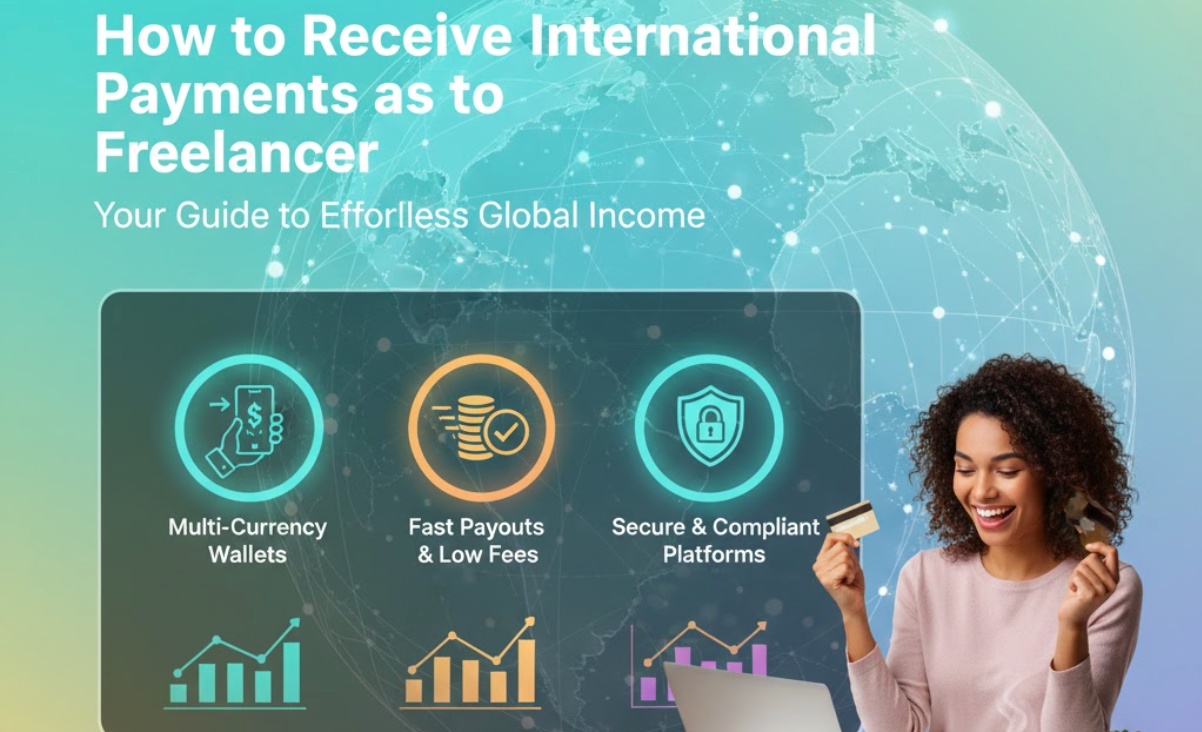
For freelancers, digital nomads, and remote workers, getting paid on time is essential — yet receiving money from international clients is often anything but simple. Traditional banks rely on outdated infrastructure that moves slowly across borders. Fees can stack up at every step: intermediary bank charges, currency conversion markups, percentage-based commissions, and hidden service fees. On top of that, SWIFT transfers may take several days to arrive, leaving freelancers with unpredictable payment timelines and cash-flow stress.
For freelancers, digital nomads, and remote workers, getting paid on time is essential — yet receiving money from international clients is often anything but simple. Traditional banks rely on outdated infrastructure that moves slowly across borders. Fees can stack up at every step: intermediary bank charges, currency conversion markups, percentage-based commissions, and hidden service fees. On top of that, SWIFT transfers may take several days to arrive, leaving freelancers with unpredictable payment timelines and cash-flow stress.
Because of these challenges, an increasing number of professionals are shifting to flexible and modern alternatives — from multi-currency accounts to digital wallets and blockchain-based transfers. These tools make global money transfers for businesses with OpenDue and for freelancers faster, cheaper, and significantly more transparent. In this guide, we will compare traditional and modern payout methods, explain how freelancers can get paid globally with fewer delays, and outline the best strategies to manage payments efficiently in 2025 and beyond.
Traditional Methods of Receiving Payments
SWIFT Transfers
International bank transfers via the SWIFT network have existed for more than four decades. They remain one of the most recognized and widely accepted ways to send money across borders. For freelancers, SWIFT feels familiar and stable — especially when dealing with corporate clients.
But the reliability comes with notable drawbacks:
- High fees. Banks charge outgoing, incoming, and intermediary fees. Total deductions can reach $30–$60 per transfer.
- Slow processing times. Transfers often take 3–5 business days, sometimes longer depending on the route.
- Complex currency conversion. Banks typically apply unfavourable FX margins without offering real-time rate visibility.
- Low transparency. Tracking status is difficult, and delays are common.
Although SWIFT remains an option for large invoices, it’s often impractical for frequent or small payouts.
PayPal & Similar Platforms
PayPal, Skrill, and Payoneer are among the most common payment channels for international freelance payments. They hold several advantages:
- Global availability
- User-friendly onboarding
- Familiarity among clients
- Instant wallet-to-wallet transfers
However, freelancers should be aware of the disadvantages:
- High percentage-based commissions (2.9%–5%)
- Currency conversion fees reaching 3–4%
- Account freezing risks if a payment is flagged for review
- Withdrawal fees to local bank accounts
- Transaction limits in some countries
PayPal-like platforms are convenient, but not always the most cost-effective for regular international payments.
Modern Options for Receiving Payments Globally
Multi-Currency Accounts for Freelancers
Multi-currency accounts are becoming the new default method for freelancers working with clients worldwide. These accounts allow users to hold balances in various currencies and get paid like a local in multiple regions.
Key advantages:
- Lower fees compared to traditional banks
- Real-time FX rates for conversions
- Local receiving accounts in USD, EUR, GBP, AUD, etc.
- Easy withdrawal options across countries
- Perfect for recurring client relationships
These accounts often integrate seamlessly with invoicing tools and freelancing platforms, making payouts smoother and cheaper.
Stablecoin Transfers
Stablecoins (like USDT, USDC, or EURC) have become a widely adopted option for remote workers and freelancers, particularly in tech, digital design, and Web3. They offer:
- Instant global transfers (usually <5 minutes)
- Very low fees (often under $1)
- Transparent on-chain verification
- Protection from extreme currency volatility
Stablecoins are particularly useful in regions with unstable banking systems or high inflation. However, freelancers must also consider:
- Regulatory variability across countries
- Need for a crypto wallet
- Conversion fees from stablecoins to local currency
Nonetheless, they can be one of the fastest and most efficient international freelance payment methods in 2025.
Local Payout Methods & Digital Wallets
In regions like Southeast Asia, Latin America, and Africa, local wallets (GCash, M-Pesa, Pix, Paytm, MercadoPago) are essential tools for freelancers receiving cross-border payments.
Benefits include:
- Instant or same-day withdrawals
- Low or zero fees
- High accessibility even without a full bank account
- Integration with local banking, mobile money, and QR-based payments
Local payout methods are especially useful for freelancers living in emerging markets where international banking infrastructure is limited or expensive.
Pros and Cons of Each Method
To help you compare, here’s a structured overview of the most common freelancer payout methods in 2025:
| Method | Speed | Fees | Ease | Best For |
| SWIFT Transfer | Slow (2–5 days) | High | Medium | High-value invoices |
| PayPal / Similar | Fast | High | Easy | Small medium payments |
| Multi-Currency Accounts | Fast | Low | Easy | Ongoing clients across multiple regions |
| Stablecoins | Instant | Very low | Medium | Tech-savvy freelancers |
| Local Payout Wallets | Instant–1 day | Low | High | emerging markets |
Traditional vs Modern: Summary
Traditional methods (SWIFT, PayPal):
- Familiar, widely accepted
- More expensive
- Often slower
- Limited transparency
Modern methods (multi-currency accounts, stablecoins, local wallets):
- Faster
- Lower fees
- Better FX rates
- Higher flexibility
- Ideal for a global client base
Best Practices to Get Paid as a Freelancer in 2025
1. Diversify Your Payment Channels
Never rely on a single service. Maintain at least two or three payout methods to avoid delays, platform freezes, or technical issues.
2. Check Currency Conversion Fees Before Accepting Payment
A 3–4% FX margin adds up quickly. Freelancers should:
- Ask clients to pay in their preferred currency
- Use tools with transparent real-time FX rates
- Avoid unnecessary conversions
3. Use Multi-Currency or Borderless Accounts
These accounts drastically reduce:
- Bank transfer fees
- FX losses
- Withdrawal delays
They are especially useful if you work with recurring clients in multiple regions.
4. Set Clear Payment Terms
Define:
- Accepted payment methods
- Deadlines
- Late fees
- Who covers transaction costs
- Currency of the invoice
Clear terms reduce disputes and delays.
5. Understand Local Tax Rules
Different countries have different requirements for reporting foreign income. Keep records, save receipts, and consult a tax specialist if necessary.
- Maintain Transparent Invoicing
Use standardized invoices that include:
- Your legal name or business name
- Tax ID (if applicable)
- Service details
- Payment instructions
- Currency
- Invoice number
Professional invoicing speeds up payments and reduces client errors.
7. Enable Automated Payments Where Possible
If you work with long-term clients, explore subscription-style billing or automated monthly transfers.
FAQ About Receiving International Payments as a Freelancer
1. What is the cheapest way to receive international payments as a freelancer?
Usually multi-currency accounts or stablecoin transfers. They offer low fees and real-time FX rates.
2. Which is better: PayPal or multi-currency accounts?
PayPal is convenient but expensive. Multi-currency accounts are better for regular payments due to lower fees and better Exchange rates.
3. Can freelancers get paid in stablecoins?
Yes. Stablecoins like USDT or USDC are increasingly used in the freelance economy for fast, low-cost global transfers.
4. How do international clients usually pay freelancers?
Common options include PayPal, bank transfers, Wise, Payoneer, multi-currency accounts, and digital wallets depending on the region.
5. What’s the safest way for freelancers to get paid globally?
Licensed fintech platforms that offer encryption, AML/KYC compliance, and secure multi-currency wallets provide the best combination of speed and reliability.
Feel free to read the full article about the receiving international payments.
Also Read More HeadlineMan Topics.
