

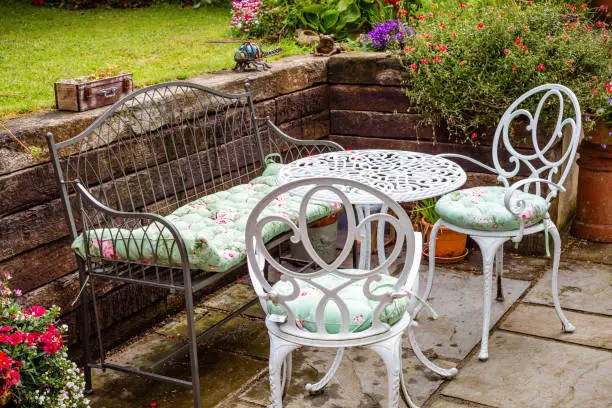
Buying garden furniture in the UK comes with its own unique challenges. We’re not shopping for furniture that’ll bask in guaranteed Mediterranean sunshine. We need pieces that can handle a sunny morning, torrential rain by lunch, and gusty winds by teatime, all whilst still looking decent and being comfortable enough to actually use.
So let’s talk about what you actually need to consider when buying garden furniture in the UK, from materials that’ll survive our weather to styles that suit British gardens.
Understanding Different Types of Garden Furniture
Before diving into specifics, it helps to understand the main categories of garden furniture available. Each serves different purposes and suits different outdoor spaces.
Dining Sets
These are designed for outdoor meals and entertaining. They typically include a table and four, six, or eight chairs. Some swap chairs for benches, which can be brilliant for families with kids. Dining sets work best if you’ve got a decent-sized patio or decking area and enjoy outdoor meals.
Lounge Sets
Think outdoor sofas, armchairs, and coffee tables. These create a relaxed seating area perfect for morning coffee or evening drinks. Lounge sets need more space than dining sets because of how the pieces spread out. They’re brilliant if you prioritise relaxation over formal dining.
Bistro Sets
Compact table and two chairs, perfect for smaller patios, balconies, or courtyard gardens. Don’t underestimate bistro sets just because they’re small. A quality bistro set can transform even the tiniest outdoor space into somewhere genuinely usable.
Benches and Individual Pieces
Sometimes a standalone bench or a couple of individual chairs work better than full sets, particularly in awkwardly shaped gardens or if you’re building up your furniture collection gradually.
The Rattan Garden Furniture UK Phenomenon
Walk around any British suburb in summer and you’ll see why rattan garden furniture UK retailers can barely keep in stock. It’s absolutely everywhere, and for good reason.
Synthetic rattan offers that relaxed, holiday vibe everyone’s after whilst being far more practical than natural rattan for British weather. Quality synthetic rattan is UV-resistant, weatherproof, and surprisingly durable. It won’t rot, split, or require much maintenance beyond occasional cleaning.
The catch? Quality varies massively. Cheap rattan uses thin, loosely woven fibres that fade quickly and can crack within a season. Better quality rattan uses thicker, more tightly woven fibres with proper UV protection. You’re looking at the difference between furniture that lasts two years versus ten.
Rattan garden furniture sets UK buyers love typically feature aluminium frames beneath the woven rattan. This keeps weight down whilst maintaining structure. All-weather cushions usually come with these sets, though you’ll want somewhere dry to store cushions when not in use.
Colour-wise, grey dominates the UK market, followed by brown and black. Grey works brilliantly with British gardens because it complements both traditional and contemporary settings without overwhelming the space.
Wooden Garden Furniture UK Considerations
There’s something timelessly British about wooden garden furniture UK gardens have featured for generations. Wood brings natural warmth and character that synthetic materials can’t quite replicate.
But not all wood is equal, particularly in British weather. Hardwoods like teak, acacia, and eucalyptus naturally resist rot and insects. They handle rain, temperature fluctuations, and UV exposure far better than softwoods.
Teak remains the premium choice. It’s incredibly durable, naturally weather-resistant, and ages into a beautiful silvery-grey patina if left untreated. Expensive, yes, but teak furniture can genuinely last decades with minimal maintenance. My in-laws have a teak set that’s been through fifteen British winters and still looks brilliant.
Acacia offers similar durability at a lower price point. It’s dense, naturally rot-resistant, and has a lovely warm colour. It benefits from annual oiling and should ideally be covered or stored in winter, but it’s far less demanding than softwoods.
Eucalyptus grows quickly, making it a more sustainable choice. It’s reasonably weather-resistant and attractive, though not quite as durable as teak or acacia. Good middle-ground option if budget’s a concern.
Softwoods like pine or treated timber are budget-friendly but require proper treatment and regular maintenance. They can work well if you’re willing to put in the effort, but be realistic about whether you’ll actually do it.
Metal Garden Furniture Options
Metal furniture divides opinion, but modern designs have come a long way from the cold, uncomfortable metal chairs of decades past.
Aluminium is lightweight, rust-resistant, and often surprisingly affordable. Brilliant if you like rearranging your space or need to move furniture regularly. Powder-coated aluminium can look extremely smart in contemporary gardens. The main drawback is weight, or lack of it. Lightweight furniture can blow around in exposed locations.
Steel, particularly powder-coated steel, offers more heft and stability. It looks fantastic in modern or industrial-style gardens. Quality matters hugely though. Any damage to the powder coating lets moisture in, and steel will rust. Check warranties and touch up any chips immediately.
Wrought iron brings traditional elegance but requires commitment. It’s heavy, which means stability but also a workout if you want to move it. Wrought iron needs regular maintenance to prevent rust, typically annual painting or treatment.
Cast aluminium mimics the look of wrought iron without the weight or rust issues. It’s a clever compromise for traditional aesthetics with modern practicality.
Luxury Garden Furniture UK Market Insights
The luxury garden furniture UK market has grown significantly as people invest more in outdoor living spaces. But what actually makes garden furniture “luxury”?
It’s not just about price tags. Luxury garden furniture typically features superior materials, exceptional craftsmanship, and thoughtful design. Teak from sustainable plantations, hand-woven synthetic rattan with thick, UV-stabilised fibres, marine-grade stainless steel fastenings that won’t rust.
Luxury pieces often include features that cheaper furniture skips. Generous cushions with premium outdoor fabrics, adjustable elements for customised comfort, modular designs that adapt to different needs, elegant details in joinery or finishing.
Brands like Gloster, Barlow Tyrie, and Neptune represent the luxury end of the UK market. Yes, their furniture costs significantly more, but it’s built to last decades rather than seasons. If you can afford it and plan to stay in your home long-term, luxury garden furniture can actually represent better value than replacing cheaper furniture every few years.
That said, you don’t need to buy everything at a luxury level. Many people invest in one luxury statement piece, perhaps a dining table or a gorgeous corner sofa, and mix in more affordable accessories.
Garden Furniture Sets UK Buying Considerations
Garden furniture sets UK retailers offer solve the matching problem, everything coordinates, proportions work together, and you’re done. Sets typically offer better value than buying pieces individually, particularly for complete dining arrangements.
However, sets aren’t always the best choice. They can lack flexibility if your space or needs are unusual. Individual pieces let you create exactly the configuration you need and add items gradually as budget allows.
Consider whether you actually need everything in a set. That eight-seater dining set looks impressive, but if you rarely have more than four people, you’re wasting space and money. A smaller set with the option to add folding chairs for occasional large gatherings often works better.
Size and Space Planning for British Gardens
British gardens aren’t typically huge, which makes space planning crucial. That gorgeous six-seater looked perfect in the garden centre’s massive display area but might overwhelm your actual patio.
Measure everything before buying. Your patio or decking area, pathways around where furniture will sit, and don’t forget vertical space if you’re considering parasols or pergolas. Leave at least 60-90cm around dining tables for pulling chairs out comfortably.
Think about how you move through your garden too. Furniture that blocks natural pathways quickly becomes annoying. My sister’s garden has a lovely lounge set that unfortunately sits directly in the path between the house and the shed. She’s constantly squeezing past it, and it’s clearly in the wrong place.
Sketch your space or use masking tape to mark where furniture would sit. Live with the marked-out space for a few days to see if it actually works for how you use your garden.
Weather Resistance Is Non-Negotiable
British weather makes weather resistance absolutely crucial. Furniture needs to handle rain, obviously, but also temperature fluctuations, UV exposure despite our reputation for grey skies, and wind that can be properly fierce.
Look for furniture specifically designed for outdoor use, not just “suitable for outdoor use.” Check what weather resistance claims actually mean. Water-resistant isn’t the same as waterproof. UV-resistant materials maintain colour and structural integrity despite sun exposure.
Most garden furniture benefits from covering or storage during harsh winter months, even the weather-resistant stuff. But realistically, most of us don’t have space to store a full dining set indoors. Quality waterproof covers are a decent compromise. Make sure they’re breathable though, to prevent moisture buildup and mould.
Maintenance Reality Check
Be honest about maintenance. Some furniture needs regular cleaning, treating, oiling, or storing. Other pieces can largely be ignored.
Synthetic rattan needs occasional hosing down, that’s about it. Wood requires annual oiling or treating, more if you want to maintain original colour rather than letting it weather naturally. Metal might need touching up if finishes chip. Natural materials generally demand more attention than synthetic ones.
If you won’t do maintenance, choose accordingly. Beautiful teak furniture that never gets oiled will dry out and potentially crack. Steel furniture with chipped powder coating will rust. Match your furniture choice to your actual maintenance commitment, not your aspirational one.
Comfort Cannot Be Compromised
Garden furniture that’s uncomfortable won’t get used, regardless of how beautiful it looks. Always sit on furniture properly before buying if possible. Five minutes at least, not just a quick perch.
Dining chairs should support comfortable sitting for at least an hour. Lounge furniture needs to work for longer periods. Check seat depth against your leg length, backrest height and angle, armrest positioning.
Cushions transform comfort levels. Some sets include them, others don’t. Budget for quality outdoor cushions if they’re not included. Water-resistant cushions handle the occasional shower, though you’ll still want proper storage for them long-term.
Style Considerations for British Gardens
Garden furniture should complement your outdoor space and your home’s style. Contemporary properties suit sleek, minimalist designs. Traditional cottages look brilliant with classic wooden furniture or wrought iron pieces. Modern grey rattan works almost anywhere, explaining its dominance.
Consider your garden’s character too. Formal gardens suit structured, elegant furniture. Relaxed cottage gardens work beautifully with mismatched wooden pieces. Small urban gardens often benefit from space-saving bistro sets or wall-mounted solutions.
Colour choices matter. Neutral tones like grey, brown, and black are safe bets that won’t clash with changing seasonal planting. Bolder colours can look fantastic but commit you to specific colour schemes.
Making Your Final Decision
Choosing garden furniture in the UK means balancing aesthetics, practicality, weather resistance, maintenance, and budget. Don’t rush the decision. This furniture will define your outdoor space for years, potentially decades if you choose well.
Visit showrooms if possible. Actually sit on furniture, check build quality, examine materials up close. Read reviews from UK buyers who’ve tested furniture through British weather, not reviews from people in completely different climates.
Consider buying off-season for better deals. Autumn and winter sales can save you genuinely significant money on quality furniture. Just make sure you’ve got somewhere to store it until spring if you’re buying in November.
Ultimately, the best garden furniture is whatever you’ll actually use. Choose pieces that fit your lifestyle, your space, your maintenance commitment, and your aesthetic preferences. Your garden should be somewhere you want to spend time, and the right furniture makes all the difference.
Also Read More Headlineman topics